The same proven sequence behind every Whites Elm engagement, whether that’s a focused health-check or a full enterprise program build. Designed to leave your team better off at every stage.
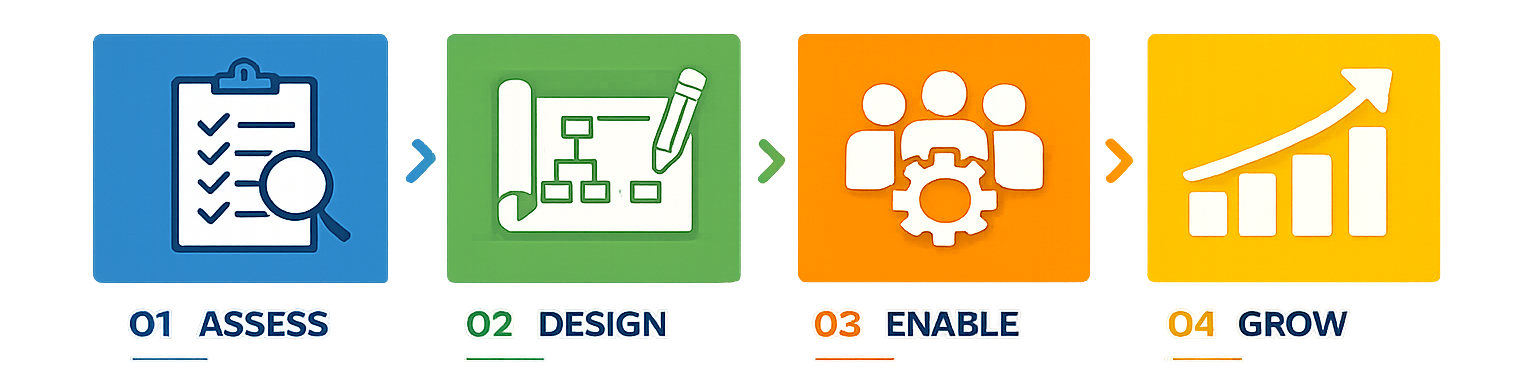
Ground truth before recommendations. We learn the assets, the work, and the team.
Decision paths that match your real-world constraints. We strip out friction.
Roles, tools, and expectations made tangible. Design becomes daily practice.
Metrics that drive outcomes, and capability that keeps growing after we hand off.
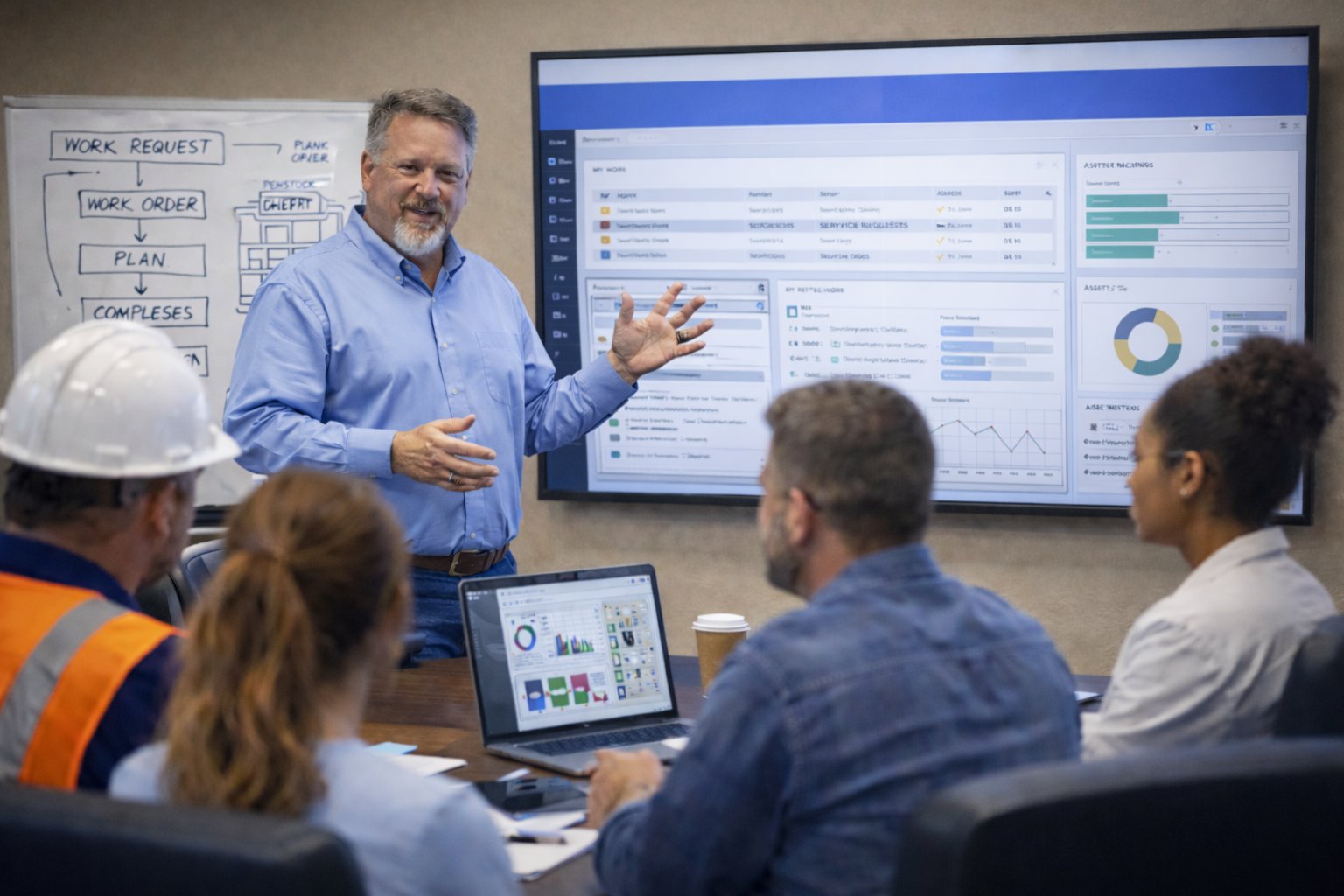
Before we recommend anything, we listen. We interview leaders and frontline crews, walk the plant, the substation, or the campus, work hands-on in the EAM, and look closely at the process and the gaps in the data.
The deliverable for this phase is a candid baseline that everyone, from the VP to the planner to the technician, can point to and agree on. That shared baseline is how we earn your confidence to suggest changes.


Strategy and structure that match your real-world constraints, not somebody else’s reference architecture. We strip out friction and ambiguity rather than adding to them. Every framework, decision path, and process we design is built to be used by people with full inboxes and limited time.
We co-design with your team. The output of this phase is something your planners, supervisors, and managers can pick up and run with on a Tuesday morning, not something they have to translate from consultant-speak first.
The riskiest moment in any consulting engagement is the handoff. Most firms hand a binder over the wall and head to the next client. We stay close: training cohorts, coaching for managers, sandbox exercises, and side-by-side launches with the people who’ll own the work.
We design the rollout, the comms, and the reinforcement so that the new way of working sticks, and so the people who own it day-to-day know they’ll have backup the first time something goes sideways.

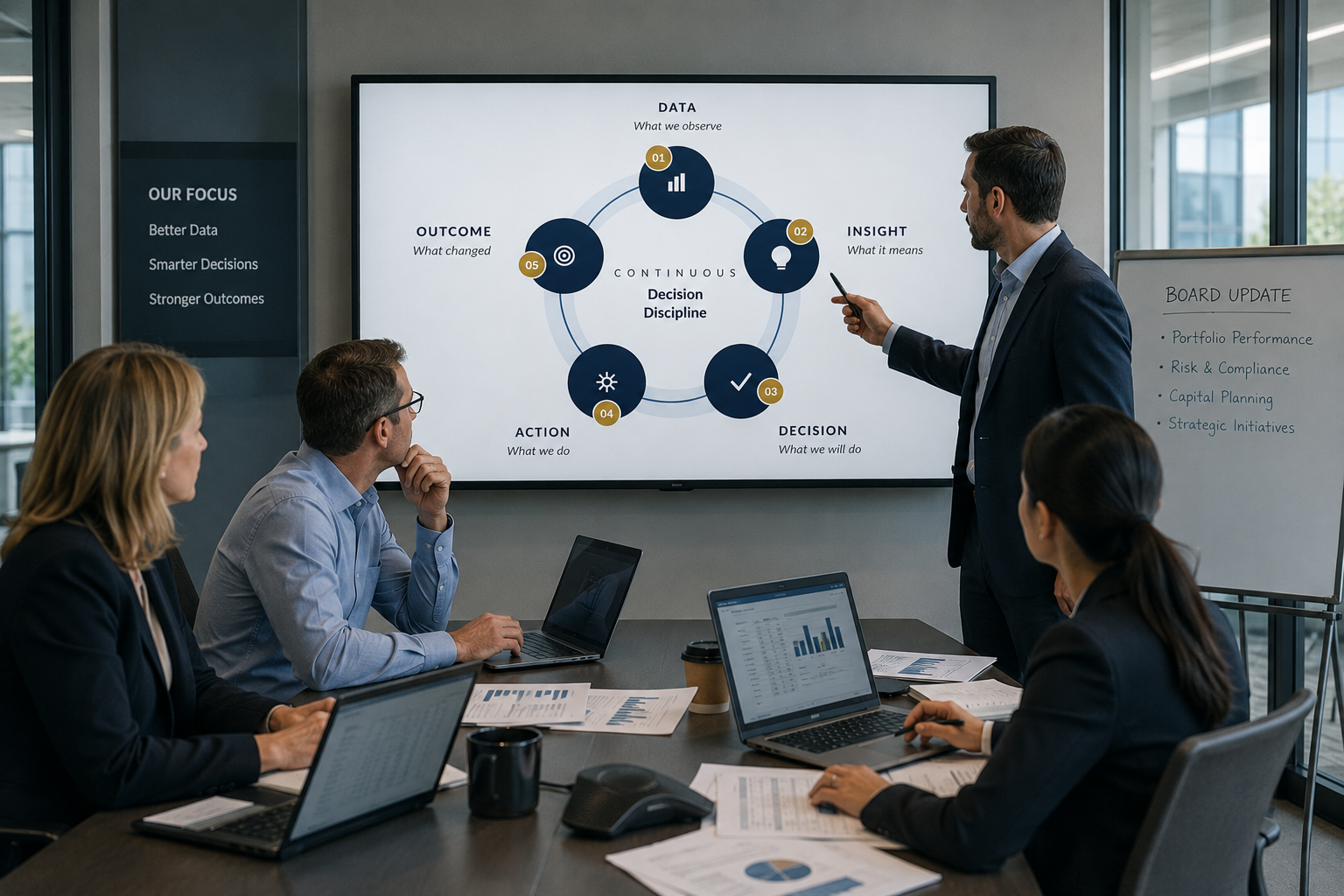
Programs keep improving when they have a feedback loop. We design KPIs that drive outcomes, not vanity dashboards, and a quarterly cadence for revisiting what’s working and what isn’t.
Growing the program also means growing the people running it. By the time we hand off, the team has the language, the frameworks, and the confidence to speak for the program in front of the board, the regulator, and the next budget cycle. That’s the version of “teach you to fish” we’re after.
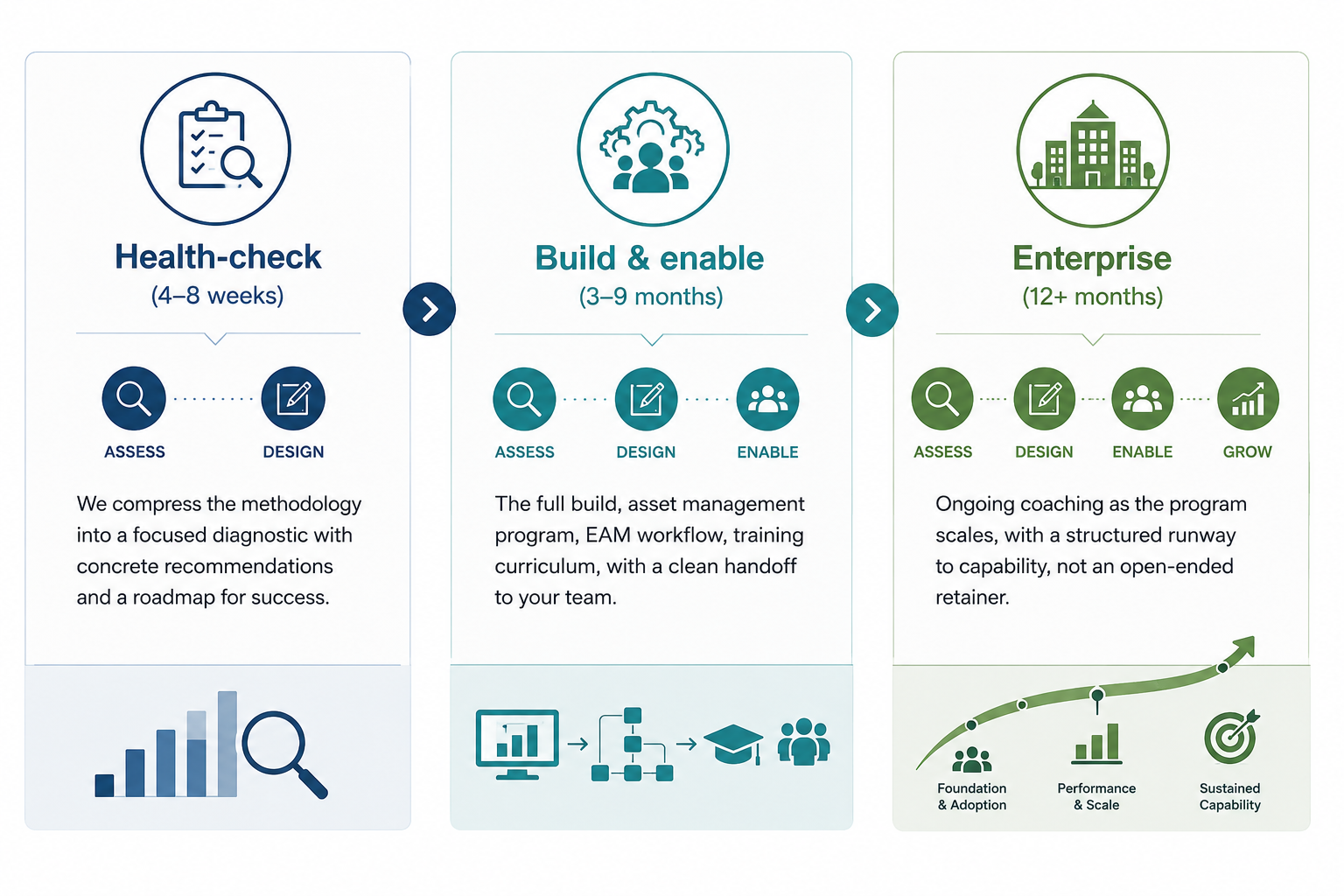
A 30-minute call gets you an honest read on where you are in the four-step path and the smallest next move worth making.